Stop-Loss / Stop-Win
Stop rule na di only part of “system” wey get real effect, becos e dey change how much you dey bet.
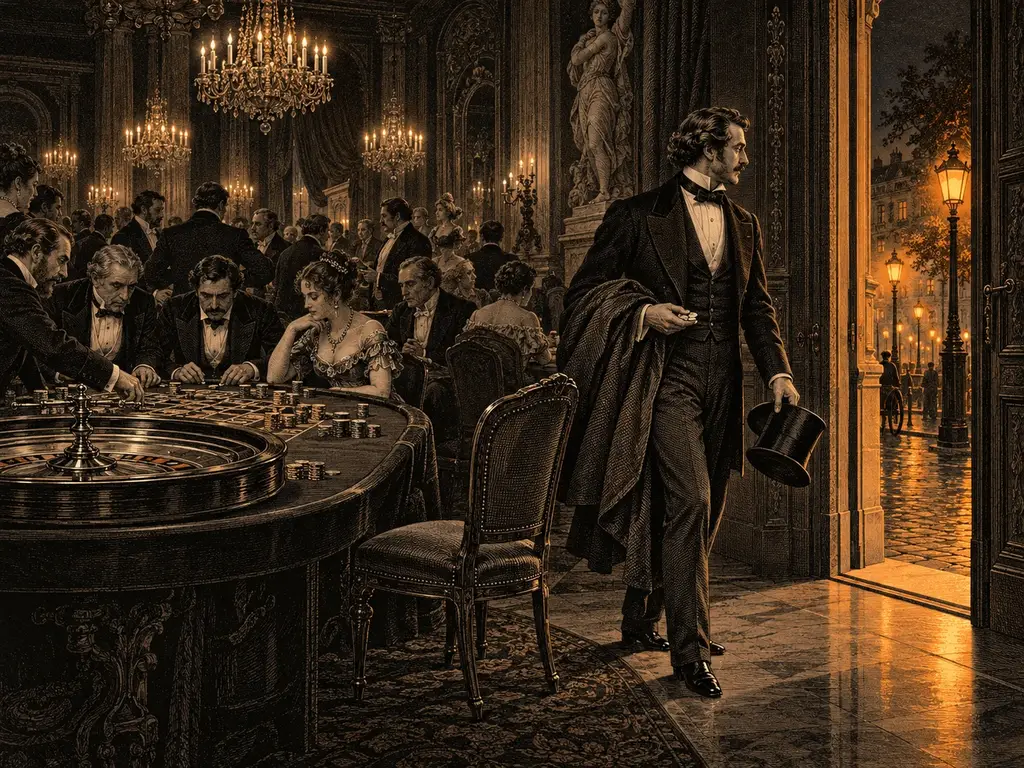
To stop early dey reduce di total amount wey you bet and so e dey reduce di expected loss. E no dey create edge; stop-win no dey “lock in” anytin wey di next spin no for fit give or take.
Stop-loss
Fix di amount wey you dey ready to lose and leave when e finish. E dey put cap on di worst case, e dey end di session before you begin chase loss, and e dey make di expected cost of di evening sometin wey you fit calculate: never pass di stop-lossstrategyStop-lossOne amount of loss wey you set before, wey you go end di session when you reach am.Read di whole tin →, usually less. Among all di rules for dis site, na di one wey dey change wetin happen to player most surely, becos na di only one wey dey surely end session.
Stop-win
Fix target and leave when you reach am. E dey make sessions wey win dey happen more often and dem go small pass. Over plenty sessions, di average still na −2.70% of turnovermoniTurnoverDi total moni wey you bet for one session or one period, including winnings wey you bet again. Dem also dey call am: handle, action.Read di whole tin →; you don only rearrange when di losses go come, you no remove dem. Di phrase “lock in profit” dey describe feeling. Di next spin go always be 18/37 whether you play am tonight or next week.
Old argument
Whether to quit while you dey ahead dey help, pipo don argue am for long time. Di logician John Venn tok sey player wey alone fit choose when to stop get di advantage, if credit no get limit. Lord Rayleigh answer sey with fortunes wey get limit for both sides, di advantage go disappear, and di modern theorems agree: no rule for when to stop dey change di average result for each unitmoniUnitDi base stake wey system or player dey work with. Dem dey describe progressions in units so dat dem go fit work for any table.Read di whole tin → wey you stake (Epstein, 2013). French get phrase for to leave di table while you dey ahead, faire Charlemagne. E dey name habit, no be edge.

Why di mean dey improve
No be becos di stop dey find good moment to leave. Na becos session wey end afta 60 spins don bet 60 stakes instead of 100 and e don pay 2.70% for fewer dollars. Any rule wey dey reduce turnover dey reduce expected lossmathsExpected lossExpected value times di total moni wey you bet; di average amount wey you go lose for one session or one period.Read di whole tin → for exact proportion: stop-loss, stop-winstrategyStop-winOne profit target wey you set before, wey you go end di session when you reach am.Read di whole tin →, time limit, spin count or just smaller stake.
How to choose di numbers
Stop-loss of 20–40% of di session budget dey make bad night sometin wey you fit survive, without to tight so tey normal variancemathsVarianceOne measure of how wide di results dey spread around di expected value. E high for straight up, e low for even-money bets.Read di whole tin → go trigger am most nights. Stop-win of 20–50% of di budget fit reach for normal session (even money dey reach +$100 from $500 for one point for about half of 100-spin sessions) without to be too small. Di numbers na your own personal choice; di discipline to write dem down no be.
- p10 −$460
- p25 −$300
- median −$140
- p75 +$0
- p90 +$140
Di rule about di rules
Stop rule dey work only if you decide am before di session and you no change am for di middle. “Just one more spin to come back to level” na di stop-loss wey di person wey e suppose protect dey renegotiate. If you see sey dat one dey happen, reduce di stake instead of to raise di limit.
Questions wey pipo dey ask
No. E dey make small wins dey come more often and e leave di long-run average at −2.70% of wetin you bet.
E dey reduce turnover di same way and e easy to keep pass. Use both.
Leave. Na di rule be dat. Di spins wey you no play no cost anytin.
Small laugh
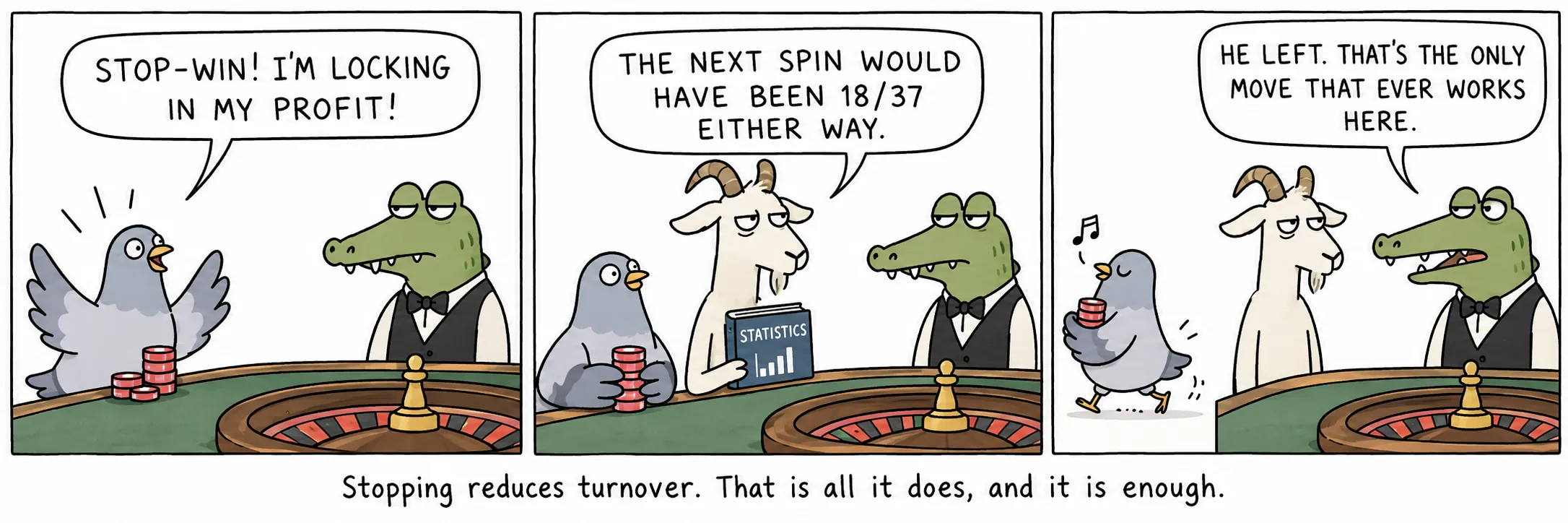
To stop dey reduce turnover. Na all wetin e dey do be dat, and e reach.
Sources
- RouletteDoc. Short look at all di roulette strategies.
- Roulette77. Short look at all di roulette strategies.
- Ethier, S. N. The Doctrine of Chances: Probabilistic Aspects of Gambling.
- Epstein, R. A. The Theory of Gambling and Statistical Logic, 2nd ed.