Why Roulette Dey Hold Pipo Like Dis?
Rounds wey fast, “near miss”, rewards wey dey come once once, and di illusion of control. Roulette, by accident of history, na game wey dem build make e hard to stop.
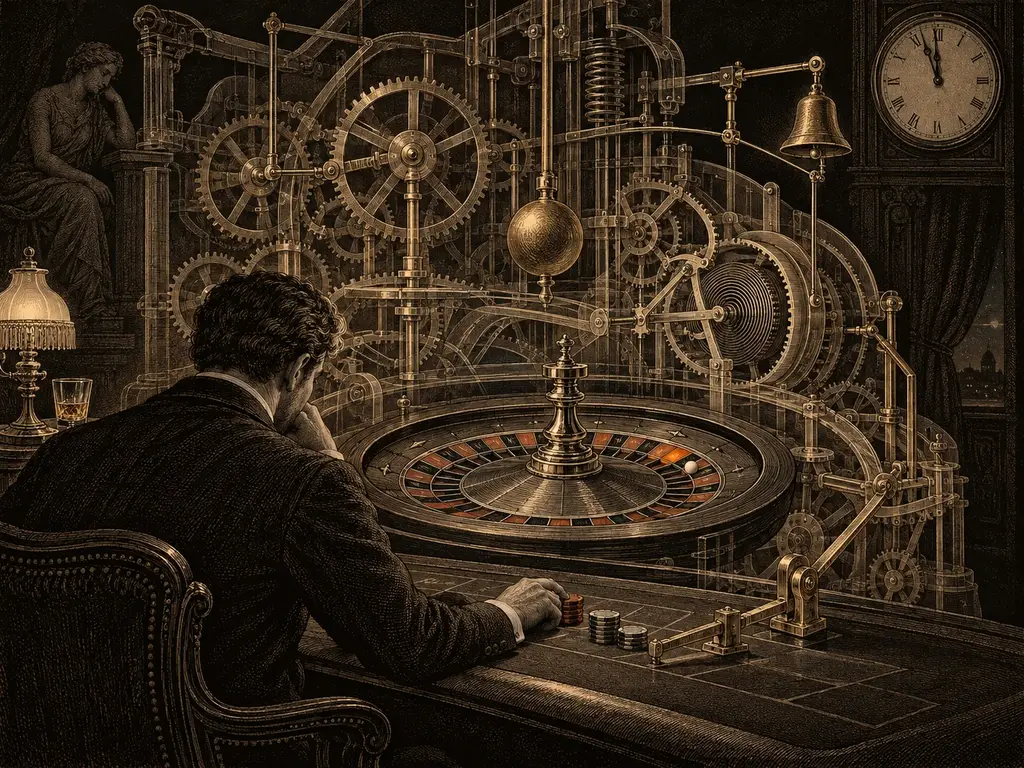
Why roulette dey hold pipo like dis? Di way dem arrange am match wetin behavioural research tok sey na di strongest tins wey dey make pipo continue: variable-ratio reinforcement, short cycles, “near miss”, personal choice over outcomes wey choice no fit change, and losses wey dey come gently reach to feel like luck.
Variable-ratio reinforcement
Reward wey dey come when nobody fit predict, afta number of tries wey dey change, dey produce di behaviour wey no dey stop pass for every kind of animal wey dem don test. Roulette na variable-ratio schedule by im design: redbetRedEven-money bet on di 18 red numbers. For French: rouge.Read di whole tin → dey pay about every second spin, straight upbetStraight upOne single number, e dey pay 35:1.Read di whole tin → about every 37th, without any pattern. Dem engineer slot machines to use dis one; roulette reach am for 1796 as e dey try look like fair bet.
Short cycles
One round dey take about one minute for live table and seconds for RNG table. Short cycles mean many reinforcement events for one hour and small time to reflect between dem. Speed roulette and auto wheels dey make di cycle short pass. Di expected-loss arithmetic (stake × spins / 37) na also measure of how many reinforcement events you dey buy for one hour.
Near misses
When di ballequipmentBallDi small ball wey dem dey throw for di track against di rotor. Modern balls na ivorine or Teflon, 18–21 mm.Read di whole tin → land for di pocketequipmentPocketOne of di 37 small boxes wey get number for di rotor. Dem also dey call am: slot, cup.Read di whole tin → wey dey beside your number, di reward system of di brain dey respond small like sey na win. Studies of slot players show sey “near miss” dey make pipo continue pass; roulette dey produce dem every time, becos every number get two neighboursbetNeighboursOne number and di two pockets for each side of am for di wheel, five straight-up chips.Read di whole tin → and di layoutequipmentLayoutDi betting grid wey dem print for di table. Dem also dey call am: table, felt, cloth.Read di whole tin → dey make “almost” visible (di ball on 17 when you get 18, di red wey be one pocket from blackbetBlackEven-money bet for di 18 black numbers. For French: noir.Read di whole tin →). Miss by one pocket na miss exactly like miss by eighteen, but e no dey feel like am.
Illusion of control
Players dey choose numbers, dey put chipsmoniChipToken wey stand for one fixed amount, wey you put on top di layout to make bet. Dem also dey call am: check.Read di whole tin → with care, dey follow systems and dey feel sey dia choices matter. Di outcome no dey depend on any of am. Experiments by Langer and oda pipo show sey if you allow pipo choose lottery ticket, dem go value am pass ticket wey dem give dem, even with di same odds. Roulette dey give more choice for each round pass almost any casino game, and di choice no dey matter at all, di same way.
Why to sabi dey help, small
To understand di mechanisms no dey off dem, but e dey change wetin you go do about dem. Stop rule wey you set before di first spin na decision wey you make outside di reinforcement loop. Smaller stake and slower table dey reduce di events for one hour. If you play with budget wey you change to moni instead of chips, di distance go small pass. And to call “near miss” miss, with your mouth, na small habit wey dem don measure sey e dey reduce how e dey pull you.
When e don become problem
If you dey play longer or with more moni pass wetin you plan, if you dey hide your play, if you dey chase loss, if you dey believe sey system don due to work, or if you dey feel sey to stop no be your choice. Di Responsible Gambling page dey list help lines by country, free and private. Dem don train dealers and licensed operators to notice; you get right to notice first.
Questions wey pipo dey ask
Slots get faster cycles and “near miss” wey dem engineer pass. Roulette get more illusion of control. Both na variable-ratio games; di risk dey real for each one.
Small. Knowledge dey reduce false beliefs; e no dey remove di reinforcement.
To decide di budget and di stop before you start, and to make am hard to change during play.
Small laugh
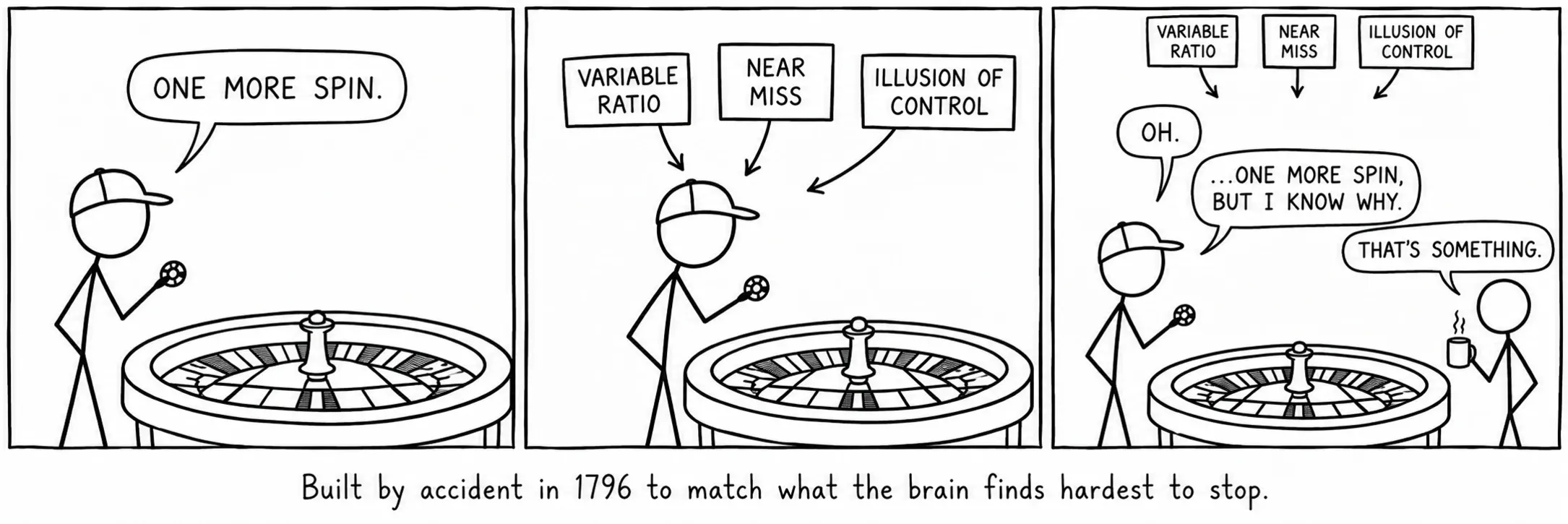
Dem build am by accident for 1796 to match wetin di brain dey find hard pass to stop.
Sources
- Langer, E. J. “The illusion of control.”
- Clark, L. et al. “Gambling near-misses enhance motivation to gamble and recruit win-related brain circuitry.”
- Schüll, N. D. Addiction by Design.