Roulette and Mathematics for School
Roulette wheel dey make probability easy to picture. Dis na how to use am for lesson without to encourage gambling.
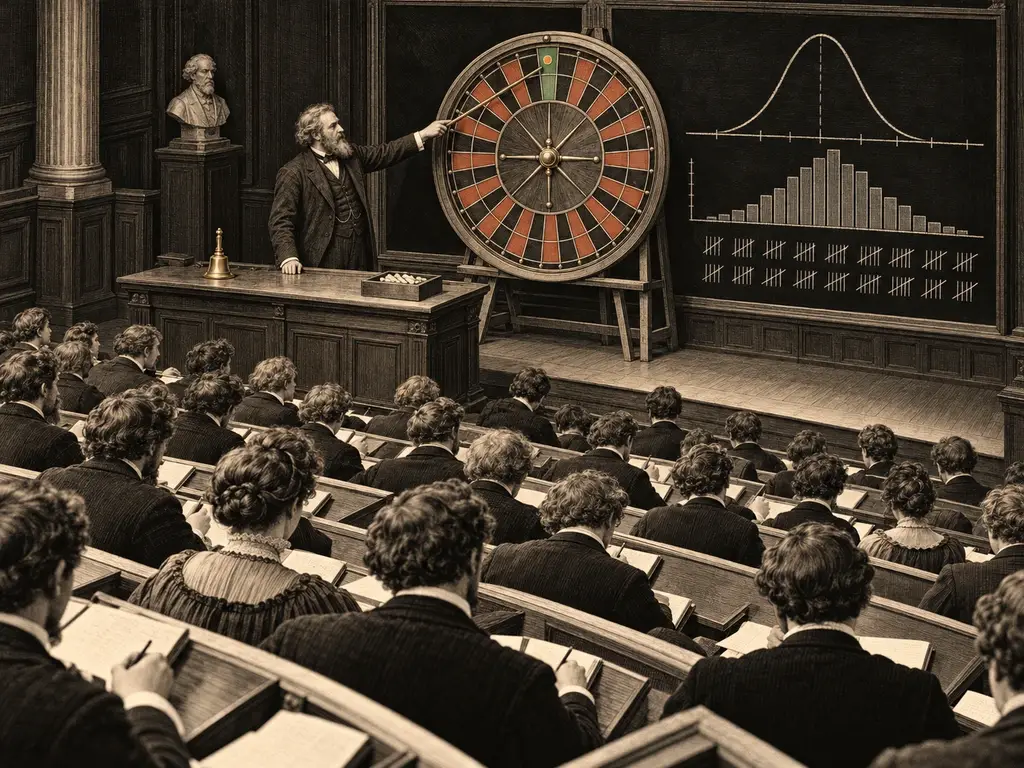
Thirty-seven outcomes wey get di same chance, payouts wey no dey change, independence, negative expectation wey dem don calculate finish, and long human record of how pipo dey get am wrong. Roulette dey show expectation, variancemathsVarianceOne measure of how wide di results dey spread around di expected value. E high for straight up, e low for even-money bets.Read di whole tin →, di law of large numbersmathsLaw of large numbersDi average of results wey no depend on each oda dey move near di expected value as di number of tries dey grow.Read di whole tin →, di gambler fallacy, hypothesis testing and di birthday problem better pass coins or dice.
Why na roulette
Coin get two outcomes and dice get six; both of dem too small to show di birthday problemmathsBirthday problemHow many pipo e go take before two of dem go probably share birthday, or how many spins before one number go probably repeat. For wheel wey get 37 pockets, 8 spins don do for chance wey pass even.Read di whole tin → or chi-square testlabChi-square testStatistical test wey dey compare di hits wey you see for each pocket with di n/37 wey you expect. Dem dey use am to judge whether wheel get bias.Read di whole tin → wey go surprise pipo. Pack of cards get memory. Roulette get 37 outcomes wey get di same chance, payoutsmoniPayoutWetin bet wey win dey return, wey dem dey quote as “X to 1” on top di stake wey dem return.Read di whole tin → wey no dey change and wey make expectation become calculation of one line, independence wey di physical design bring, and edge wey small reach to hide inside one session but big reach to control one whole year. E also get two centuries of fallacies wey dem write down to study.
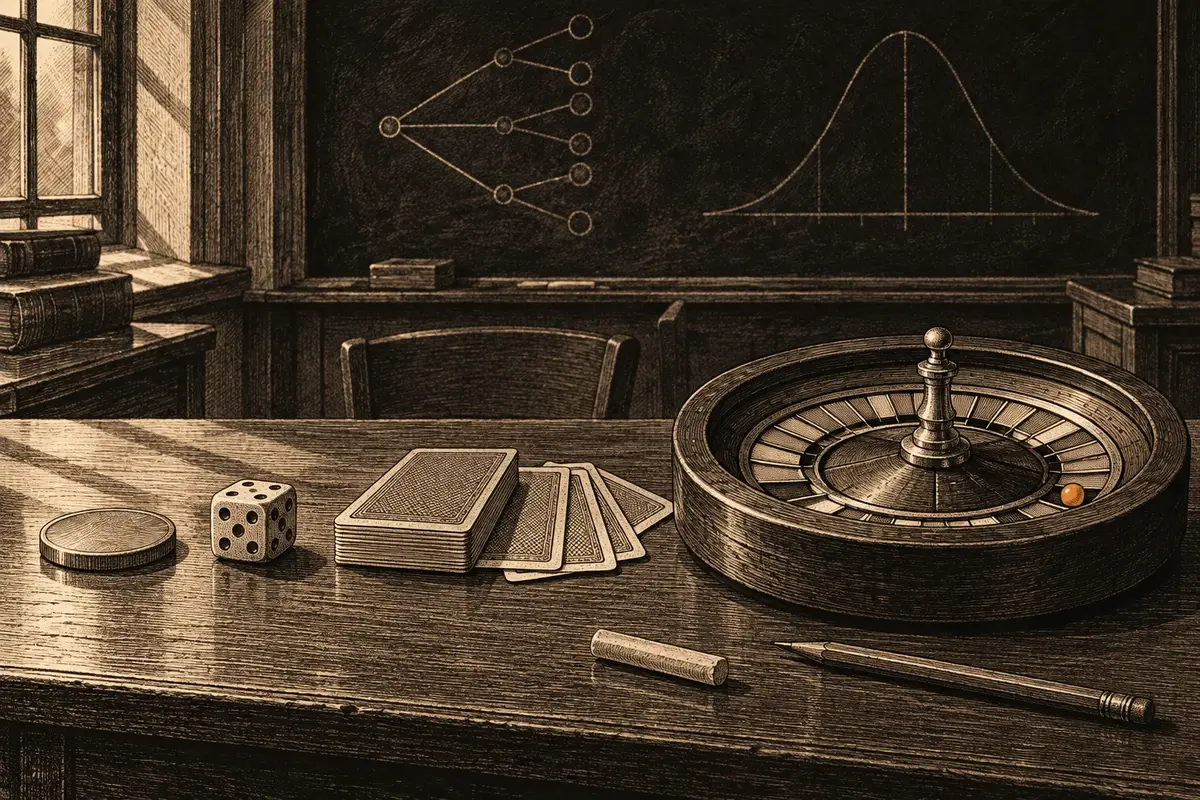
Lessons one afta di oda
How to teach without to teach gambling
Use play moni and di Demo Game, wey no get real stakes. Start with di expected valuemathsExpected valueDi average result for each bet for di long run. −1/37 of di stake for every standard European bet.Read di whole tin → and dey return to am: every exercise dey end with “and di expected value na −1/37 of di stake”. Use di systems as counter-examples, no be as methods: di exercise na to find di fault, and di simulator dey show di fault inside seconds. Add di history of pipo wey lose. Di lesson na sey di arithmetic dey win, and dat one na di opposite of advert.
Exercises wey dey work
Make students guess how many spins go pass before one number repeat, then run di Demo Game ten times (birthday problem). Make dem write “system” for di strategy editor and run 10,000 sessions (linearity of expectation). Make dem calculate di probabilitymathsProbabilityDi chance of one outcome, from 0 to 1 or from 0% to 100%. One number: 1/37 = 2.70%.Read di whole tin → of di 1913 run, and then di probability sey di run go happen somewhere inside fifty years of Monte Carlo (di difference between one specific event and any event). Make dem find di pocketequipmentPocketOne of di 37 small boxes wey get number for di rotor. Dem also dey call am: slot, cup.Read di whole tin → wey “get bias” inside spin history of fair wheel, and then shuffle di data (multiple comparisons).
How to Read Spin History Wey Dem PublishStatistical Significance
Why e dey stay for head
Students dey remember di 26 blacksbetBlackEven-money bet for di 18 black numbers. For French: noir.Read di whole tin →, di wheel of Jagger, and di moment wey di simulator show sey dia system dey lose. Probability wey no get picture, dem don forget am before exam; wheel, dem no dey forget. Di ethical line clear: use di game take teach di arithmetic wey make di game bad bet, and di students wey go gamble later go at least sabi di price.
Questions wey pipo dey ask
With play moni and clear message sey di house edgemathsHouse edgeDi part of each stake wey di casino dey keep for average: 2.70% for European roulette.Read di whole tin → na di lesson, yes: many curricula don already dey use dice and lotteries; roulette na richer version of di same tin.
House Edge for Roulette, then di Demo Game, then di Simulator for Roulette Strategy.
E no get real moni, no accounts and no links to operators.
Small laugh
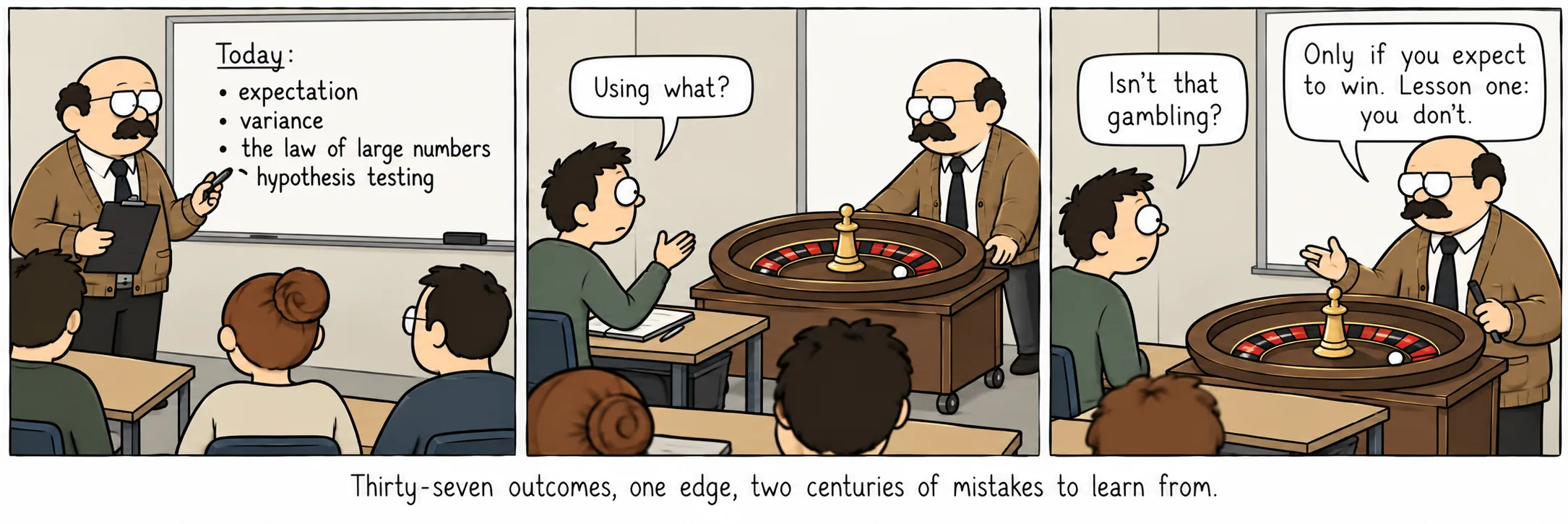
Thirty-seven outcomes, one edge, two centuries of mistakes wey you fit learn from.
Sources
- Feller, W. An Introduction to Probability Theory and Its Applications, Vol. 1.
- Ethier, S. N. The Doctrine of Chances: Probabilistic Aspects of Gambling.