Blaise Pascal: Di Tori of Di Roulette Wheel
Di mathematician wey pipo dey usually give credit for di wheel, wey bin dey try build anoda tin.
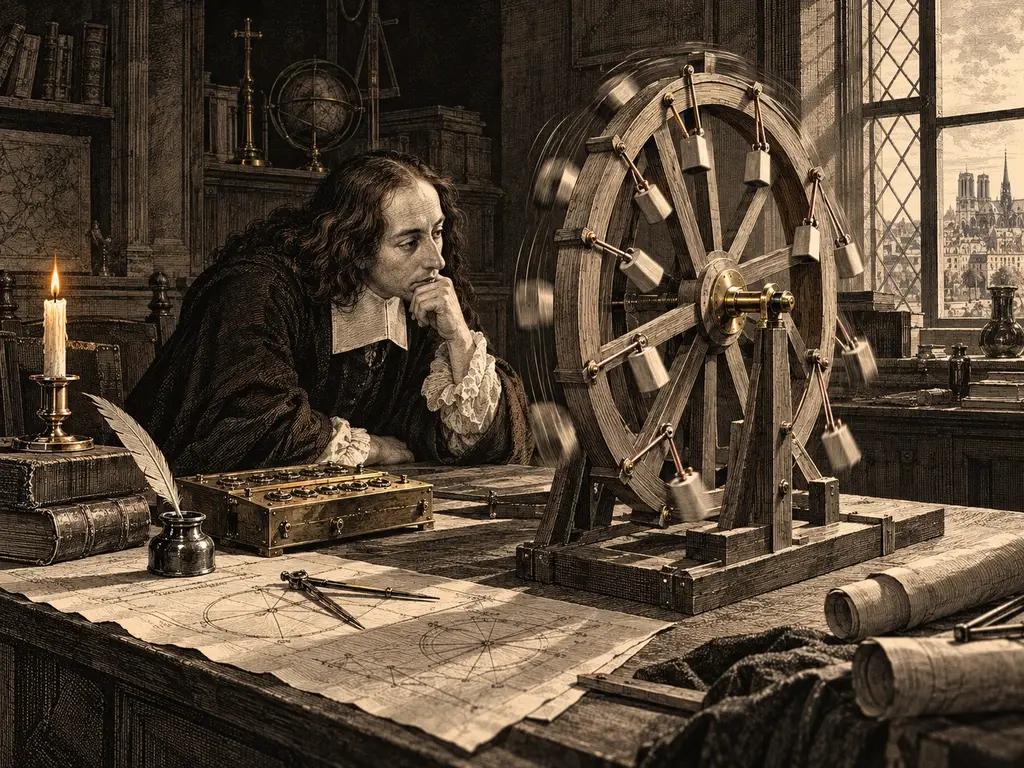
Pascal (1623–1662) do experiments wit perpetual-motion machines for di 1650s. Di spinning wheel wey almost no get friction, wey pipo tok sey na im build am, fit be di grandfather of di roulette rotor; but di credit na tradition, no be wetin document show.
Di mathematician
Blaise Pascal build mechanical calculator when e be nineteen years, prove results for projective geometry as teenager, do foundation work on pressure and vacuum, and for 1654, inside letters wit Pierre de Fermat, e solve di “problem of points”: how to share di stakes of game of chance wey stop for middle, make e fair. Dia answer, to share am according to di probabilitymathsProbabilityDi chance of one outcome, from 0 to 1 or from 0% to 100%. One number: 1/37 = 2.70%.Read di whole tin → wey each player get to win if di game bin continue, na di beginning of expected valuemathsExpected valueDi average result for each bet for di long run. −1/37 of di stake for every standard European bet.Read di whole tin →. Every EV calculation for dis site come from dose letters.
Blaise Pascal get roulette machine?
For di middle of di 1650s Pascal dey work on perpetual-motion machine, and pipo tok sey e build wheel wey balance well well, wey dey spin for long time wit small friction. Di story sey dis wheel become di roulette rotorequipmentRotorDi part of di wheel wey dey spin and carry di pockets.Read di whole tin → dey for plenty history books, but no one of di primary sources document am. E fit be sey di pipo wey run spa towns for di 18th century use di name to sell di game. Di Lab no go accept am based on di evidence.
Probability, for im own words and our own
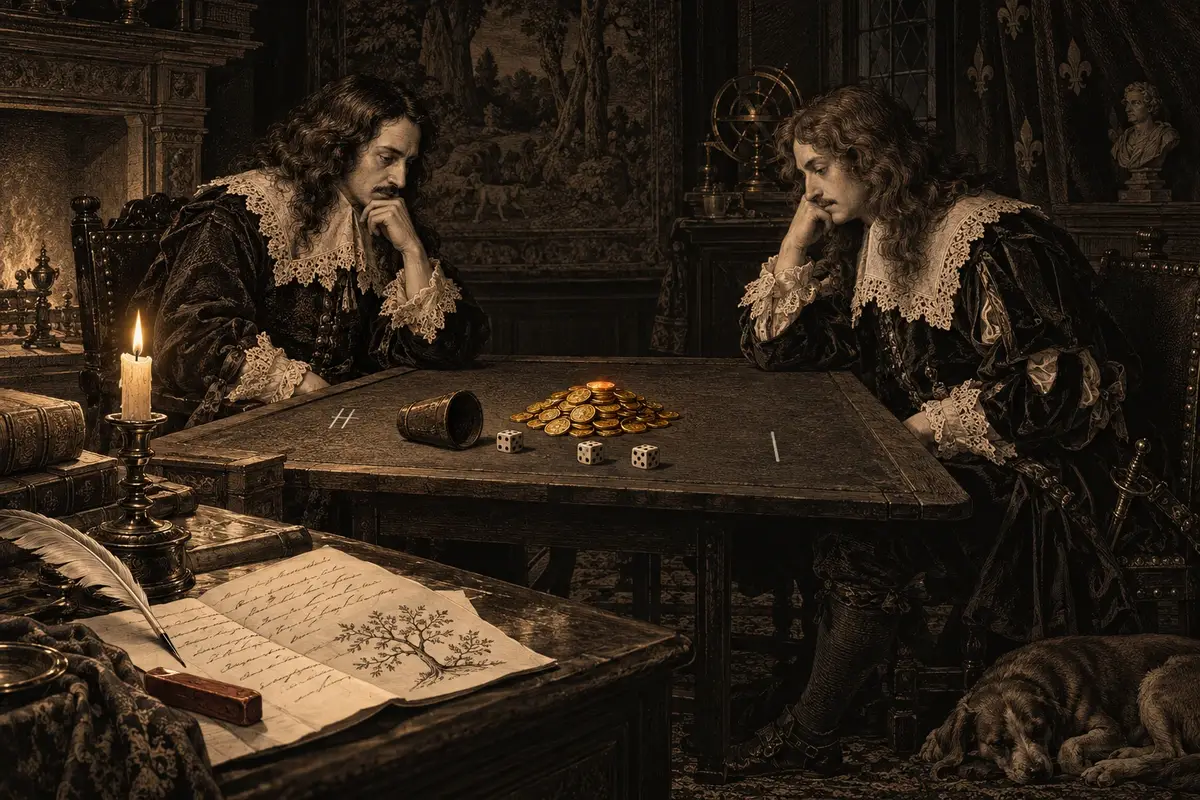
Di 1654 letters no mention roulette, becos roulette never dey dat time. Dem ask: two players need three points to win one pot; dem stop for 2–1; how dem go share di pot? Pascal answer use wetin we go now call conditional expectation, plus argument wey dey go down di tree of all di ways di game fit continue. Huygens read di letters and for 1657 e publish di first textbook on expectation. Di word “expectation” na im own.
Pascal and Fermat solve di problem of points: expected value as di fair price of one position.
Huygens, De Ratiociniis in Ludo Aleae: di first printed work on expectation.
Jakob Bernoulli, Ars Conjectandi: di law of large numbers.
Pipo describe roulette for Paris. Every payout na 36/n − 1: EV = −1/37 (or −2/38).
Pearson chi-square test, wey e show on roulette spins.
All di tins wey dey up, for dis site, inside browser.
Di wager
Di argument about betting wey make Pascal popular pass no be about roulette but about God: di “wager” for di Pensées wey see belief as bet wey get payoff wey no get end. Na expected-value argument, and na di first time anybody use decision theory to argue for anytin. Roulette players wey dey call Pascal name for di wheel dey call di wrong Pascal; di one wey matter na di one wey show how to put price on gamble.
Di irony
Weda Pascal build di first roulette wheel or not, di game show im real work well: one machine from man wey prove sey you no fit get sometin for notin (perpetual motion no dey work; expectation no dey change), and dem dey use am show di same tin to some million players every year.
Questions wey pipo dey ask
E dey move wit gambling pipo for Paris for di early 1650s, na so di problem of points take reach am through di Chevalier de Méré. No record show sey e play for moni seriously.
Becos na fine story and becos casino promoters for di 19th century like am. If you tell am, add footnote.
Small laugh
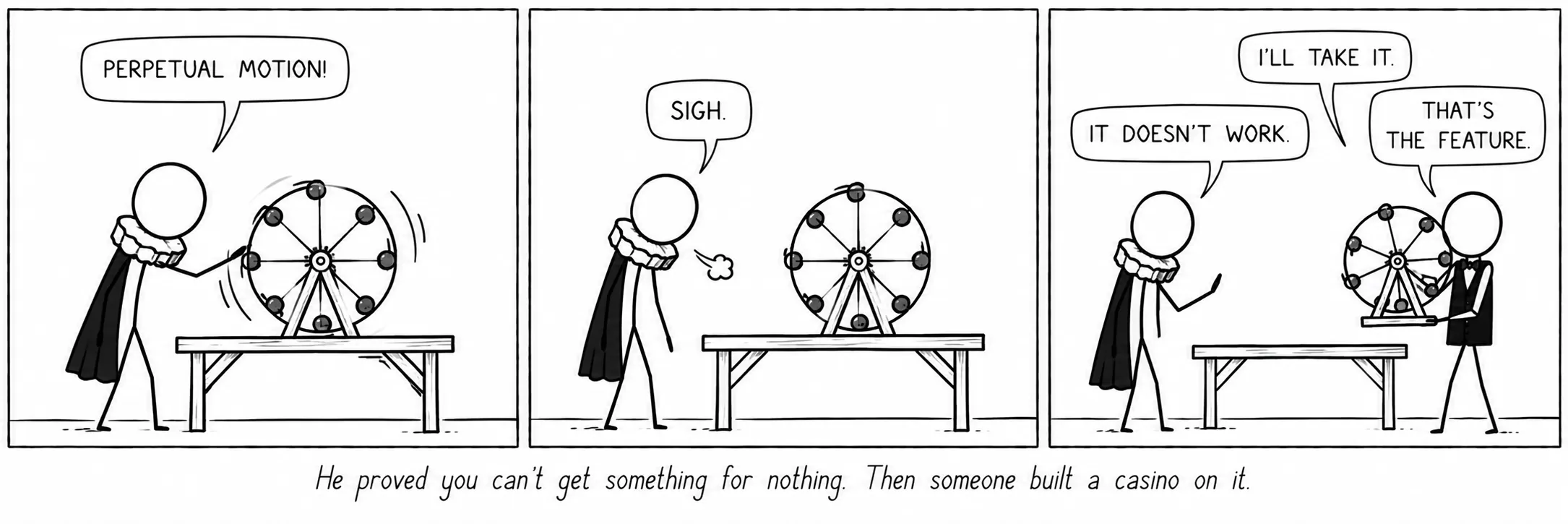
E prove sey you no fit get sometin for notin. Den somebody build casino on top am.
Sources
- Pascal, B. & Fermat, P. Letters on di problem of points.
- Huygens, C. De Ratiociniis in Ludo Aleae.
- Kavanagh, T. M. Dice, Cards, Wheels: A Different History of French Culture.