Di Man Wey Break Di Bank
One fraudster, one secret system, one week wey pass normal, and one music-hall song wey outlive all of dem.
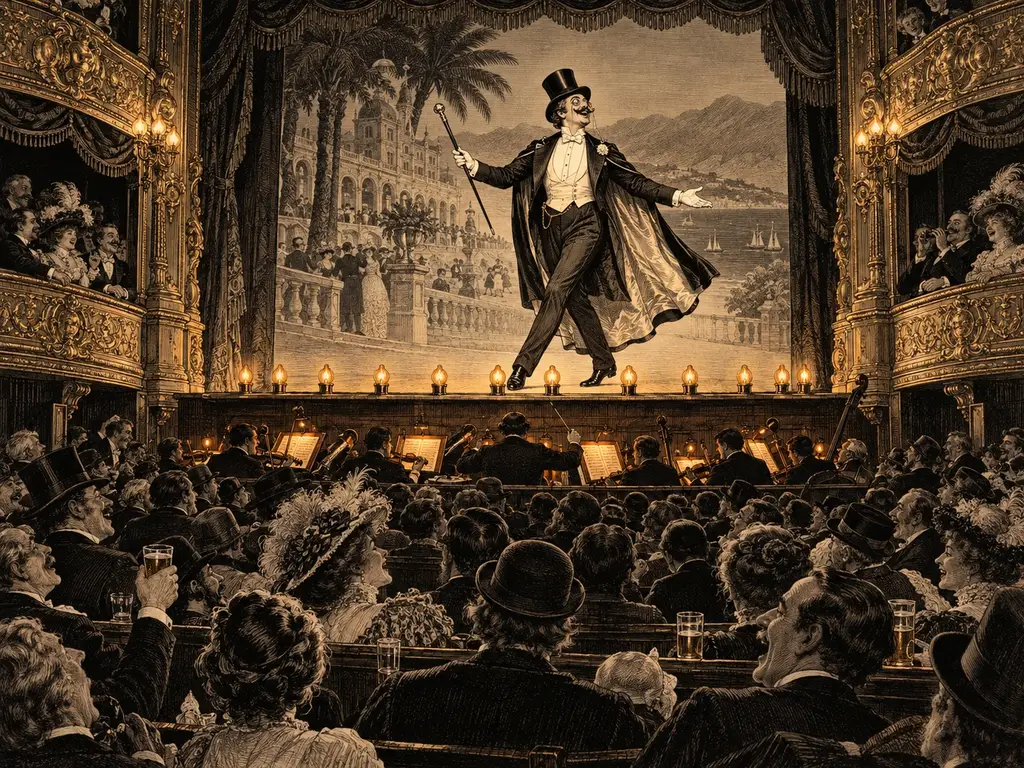
Charles Wells break di bank for Monte Carlo many times for 1891 wit run of luck and system wey e never explain. Di song wey dem write about am for 1892 make “to break di bank” become common phrase. E lose part of di moni back dat winter and spend years for prison for fraud.
Who e be
Charles Deville Wells (1841–1922) na engineer and fraudster wey dey do am again and again, wey dey collect moni from investors for inventions wey no dey exist. For July 1891 e reach Monte Carlo wit £4,000 of such moni. Inside five days e break di bank, wey mean sey e finish di cash reserve of one table, many times, and e leave wit about £40,000 as e tok am, several million pounds for today moni.

Wetin e really do
E tok sey e get system wey no dey fail and e never tok wetin e be. Witnesses no see any clear pattern for im play, and no account wey you fit trust name any method; di MartingalestrategyMartingaleProgression wey dey double di bet afta every loss. Check di Strategy section to see wetin e dey do and wetin e no dey do.Read di whole tin → wey pipo dey often join wit im name na guess. E no really matter: every system for di layoutequipmentLayoutDi betting grid wey dem print for di table. Dem also dey call am: table, felt, cloth.Read di whole tin → get di same expected valuemathsExpected valueDi average result for each bet for di long run. −1/37 of di stake for every standard European bet.Read di whole tin →, so whatever e do, di result na long run of luck. Di probabilitymathsProbabilityDi chance of one outcome, from 0 to 1 or from 0% to 100%. One number: 1/37 = 2.70%.Read di whole tin → of run of luck wey long like im own small for any one player, but e big for di thousands wey dey pass through one casino inside one season. Somebody go be Wells. Na Wells be am.
Di song
“The Man Who Broke the Bank at Monte Carlo” (1892) by Fred Gilbert, wey Charles Coborn sing, na very big hit for di music halls of London and e cross go America. Di person wey dey tell di story dey waka for di boulevard wit pride, and di phrase “break di bank” don mean big win since den. Di song no mention di second visit.
Di second visit and afta
Wells come back dat autumn and win again, den e lose part of di moni for one visit for di winter of 1891–92. E spend plenty on one luxury yacht, di Palais Royale, wit di moni of investors; e never reach Monte Carlo. Late for 1892 French police hold am for Le Havre, and for March 1893 one London court give am eight years of penal servitude for fraud. Dem free am for 1899, e collect three more years for 1906 for anoda fraud, and for about 1911 e run fake bank for Paris wey promise 1% every day, and dat one put am for French prison. E die for London for 1922. Di casino, wey pay £40,000 for 1891 and collect more pass dat for publicity, gain well well from am.
Dem born am for Hertfordshire.
Patents and investment schemes wey be fraud.
Monte Carlo: e break di bank many times; e win ≈ £40,000.
E come back; e win again.
E lose part of am back. Di song, 1892. One yacht wey never sail go Monaco.
Court for London find am guilty of fraud; eight years.
Anoda fraud, three more years.
Dem jail am for France for bank fraud.
E die for London.
Why di story matter
Na di clearest case of system wey “work” and den e no work. Di system no do anytin both times; di luck come and go, as di variancemathsVarianceOne measure of how wide di results dey spread around di expected value. E high for straight up, e low for even-money bets.Read di whole tin → pages tok sey e must. Di casino lose one week and win one legend. Every system wey dem don sell since den get one Wells for im testimonials, and every one of dem get second visit wey di testimonial no mention.
Questions wey pipo dey ask
No evidence of am for di tables. Im frauds na for oda places.
Many million pounds, as most measures show.
Each table get cash reserve; when e finish, di table go pause and dem go bring more. Moni never finish for di casino.
Small laugh
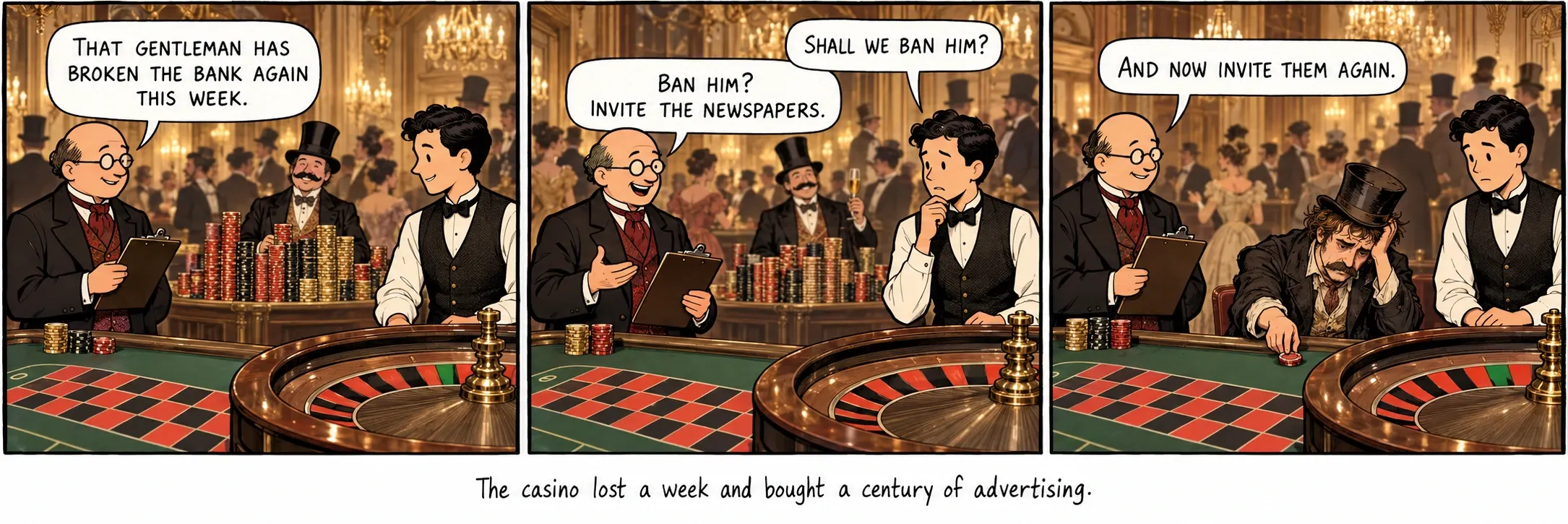
Di casino lose one week and buy one century of advertising.
Sources
- Quinn, R. The Man Who Broke the Bank at Monte Carlo.
- Old Bailey Proceedings Online. Di trial of Charles Wells, March 1893 (t18930306-349).
- Schwartz, D. G. Roll the Bones: The History of Gambling.
- Kavanagh, T. M. Dice, Cards, Wheels: A Different History of French Culture.