Roulette Results: How to Read Di Board
Di electronic board wey dey above every wheel dey show roulette results wey don pass. E no sabi anytin about di future, and dis na wetin e dey show.
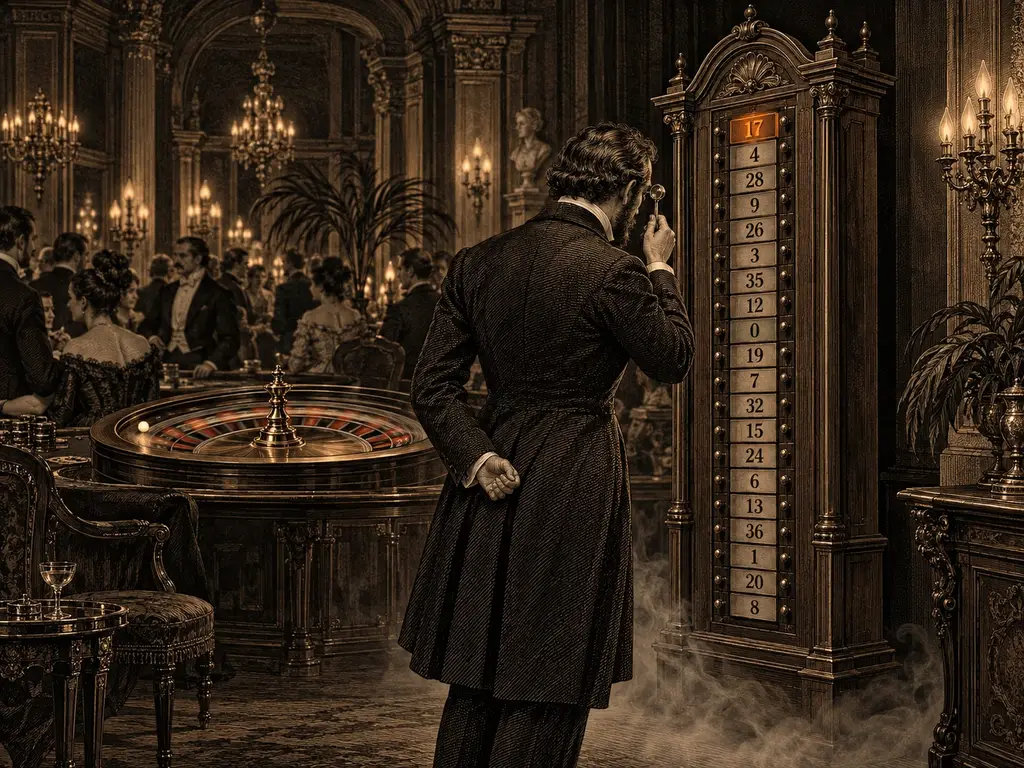
Results boards dey list recent numbers, how many times each colour land, hot and cold numbersmythCold numberNumber wey never show for many spins. For fair wheel, e no carry any information about di spins wey dey come.Read di whole tin → and sometimes sectorwheelSectorPockets wey follow each oda for one arc of di wheel, no be group for di layout.Read di whole tin → statistics. All of am correct and no one of am dey predict di next spin. Learn how to read am so dat you fit ignore am on purpose.
Wetin di board dey show
About di last twenty results one afta di oda, usually with colours; di percentage of redbetRedEven-money bet on di 18 red numbers. For French: rouge.Read di whole tin →, blackbetBlackEven-money bet for di 18 black numbers. For French: noir.Read di whole tin → and zerowheelZeroDi one green pocket wey no even-money, dozen or column bet dey cover; na im be di source of di house edge. Dem also dey call am: single zero, 0.Read di whole tin → for one window; di numbers wey land pass and di ones wey land small pass (“hot” and “cold”); and for live tables, racetracktableRacetrackDi oval strip for live and electronic layouts wey dey show di numbers for wheel order, wey you dey use to put neighbours and sector bets with one tap.Read di whole tin → view with how many times each pocketequipmentPocketOne of di 37 small boxes wey get number for di rotor. Dem also dey call am: slot, cup.Read di whole tin → don hit. Some boards dey add streak indicators and “sleepers”, numbers wey never show for long time. All dis roulette statistics na summary of recent spins.
Which numbers dey land pass for roulette, and wetin dat one mean
For 300 spins, di expected count for each number na 8.1 with standard deviationmathsStandard deviationSquare root of variance; di normal distance between one result and di expected value.Read di whole tin → of 2.8. Di hottest of di 37 numbers go normally show 13 to 15 hits by chance; di coldest, 2 or 3. Board wey dey highlight number wey get 14 hits dey highlight di expected maximum of fair sample: di most common roulette numbers for di board of fair wheel na di top of random distribution, no be sometin wey di wheel get. Di Lab page about size of di sample tok sey real bias wey big reach to matter need tens of thousands of spins before e go show; di board dey show hundreds.
When di board dey wrong
Boards dey cost moni, about $7,000 each for di figures of Bollman, and one casino see sey im board pay for imself with extra roulette play inside six weeks. Dem no dey perfect. For June 2012, one board for di Rio for Las Vegas show 19 seven times one afta di oda for double-zero wheel; few days later di casino tok sey na di display spoil, no be di wheel. Seven 19s one afta di oda for fair wheel na about 1 in 3 billion, if you start to count from di first 19, and one dollar wey you leave for 19 through all di seven for don grow pass $78 billion, if any table allow am. Dem dey settle bets from di wheel and from wetin di dealer call, no be from di board.
Wetin di board dey for
Players ask for am, so casinos provide am. E still get one small honest work: e dey allow you check sey di dealer announce di number wey you see, and for live tables na im be di record of di round. For person wey dey hunt bias, na di first page of very long notebook; for everybody else, na screensaver.
How to use di board well
Use am to confirm results and to keep your own count if you dey use stop rule by number of spins. No use am to choose bet. For fair wheel, di most common numbers for roulette boards get di same chance for di next spin as di rarest ones, and every choice get di same expected valuemathsExpected valueDi average result for each bet for di long run. −1/37 of di stake for every standard European bet.Read di whole tin →; di board no fit tell you whether di wheel dey fair. If you see sey you dey bet one number becos e dey cold, read di page about gambler fallacy; if na becos e dey hot, read di same page.
Questions wey pipo dey ask
Becos di window small. For 100 spins, red go dey anywhere from 38% reach 59% most of di time.
No. Na display of results wey dem log, and dem dey check am against di audit log.
Plenty live operators dey publish full histories. Na di raw material for di Wheel Bias Analyser be dat.
Play with Maths
Try dem by yourself first. Each solution dey folded; open am when you ready.
Fourteen redsbetRedEven-money bet on di 18 red numbers. For French: rouge.Read di whole tin → wey follow each oda na di kind run wey dey make players snap di board. For European wheel, wetin be di chance sey di next 14 spins go all be red? How many runs like dat casino wey get 20 tables, each one dey spin 40 times every hour day and night, suppose expect for one year?
Show di solution
Answer 1 for 24,044 for di next 14 spins. About 150 runs of 14 reds or more every year, and about 300 if you count blackbetBlackEven-money bet for di 18 black numbers. For French: noir.Read di whole tin → runs too: almost one every day.
Fourteen reds wey follow each oda: (18/37)¹⁴ = 1 for 24,044. For double-zerowheelZeroDi one green pocket wey no even-money, dozen or column bet dey cover; na im be di source of di house edge. Dem also dey call am: single zero, 0.Read di whole tin → wheel na (18/38)¹⁴ = 1 for 34,927, di figure wey Bollman (2024) give.
One year of spins: 20 × 40 × 24 × 365 = 7,008,000. New run of reds fit start only afta spin wey no be red (19 times for 37), so runs of 14 or more dey start about 7,008,000 × 19/37 × 1/24,044 ≈ 150 times every year. Runs of black dey double am reach about 300.
Most days, somewhere for dat casino, one board dey show run wey di pipo for dat table go remember for years. Di board dey make am visible; e no dey make am mean anytin.
Small laugh
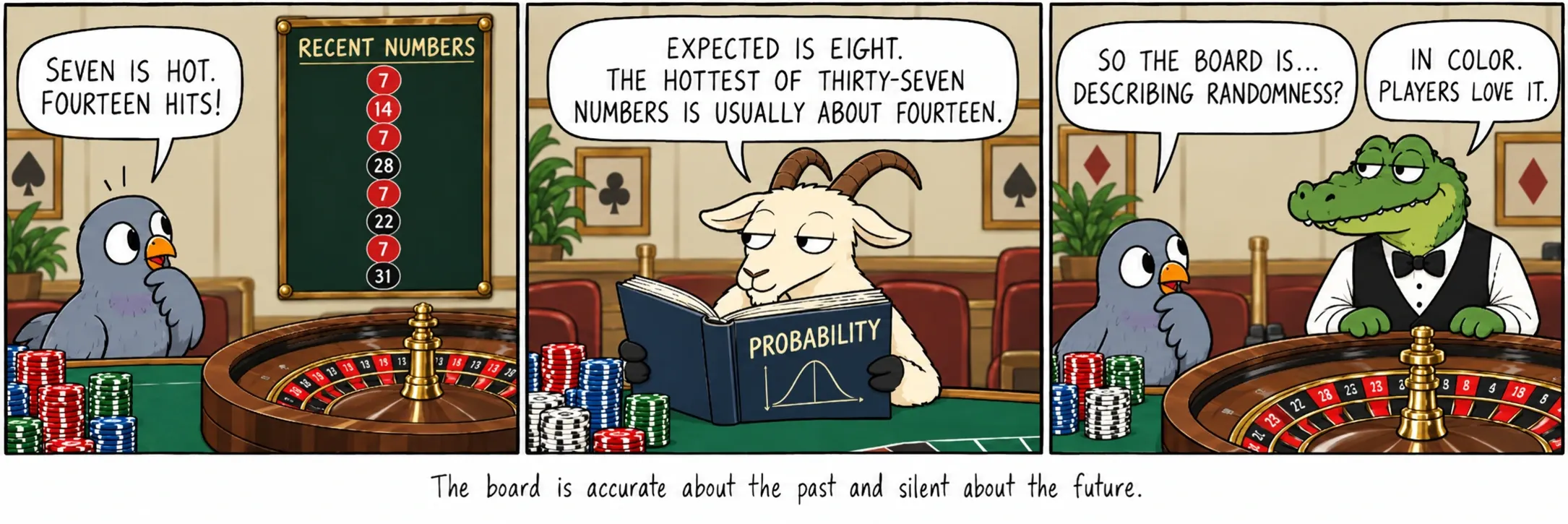
Di board correct about di past and e no dey tok anytin about di future.
Sources
- Feller, W. An Introduction to Probability Theory and Its Applications, Vol. 1.
- Bollman, M. Basic Gambling Mathematics: The Numbers Behind the Neon, 2nd ed.